


What is therapeutic boxing?
Therapeutic boxing is a body-oriented, non-contact method that uses elements from boxing training and body therapy. Therapeutic boxing enables stress to be relieved, inner tension to be regulated, and self-efficacy to be gained. Work is carried out without sparring – on focus pads, the heavy bag, or in movement. The focus is on clear movements, rhythm, force regulation, and conscious breathing. This creates a safe framework in which the body can be experienced as a resource again.
What is therapeutic boxing suitable for?
Scientific studies and practical reports show positive effects, particularly for
- Stress, excessive demands, inner restlessness
- depressive mood, listlessness
- Anxiety and emotional tension
- Difficulties with emotion and impulse regulation
- psychosomatic complaints
- neurological diseases (e.g. Parkinson's, after a stroke)
Therapeutic boxing does not replace psychotherapy, but it can complement it effectively. Change occurs not only through understanding, but also through concrete physical experience. Embodiment research has shown that movement, posture and tension have a direct influence on emotions and stress management.
Offer
Therapeutic boxing for individuals
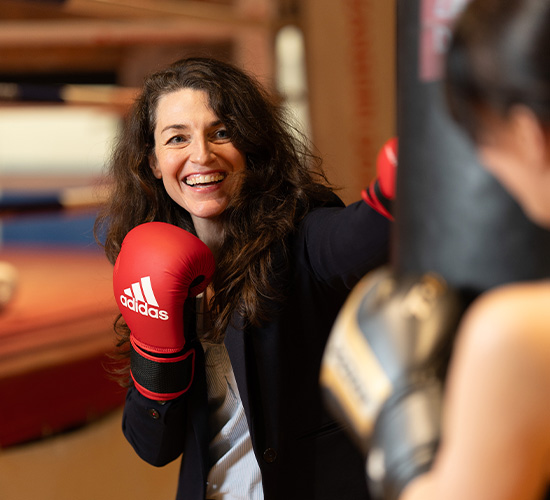
- Pace, intensity and exercises are orientated to the form of the day and the goal
- Focus on stabilisation, self-awareness and regulation
- Time for a brief reflection and transfer to everyday life

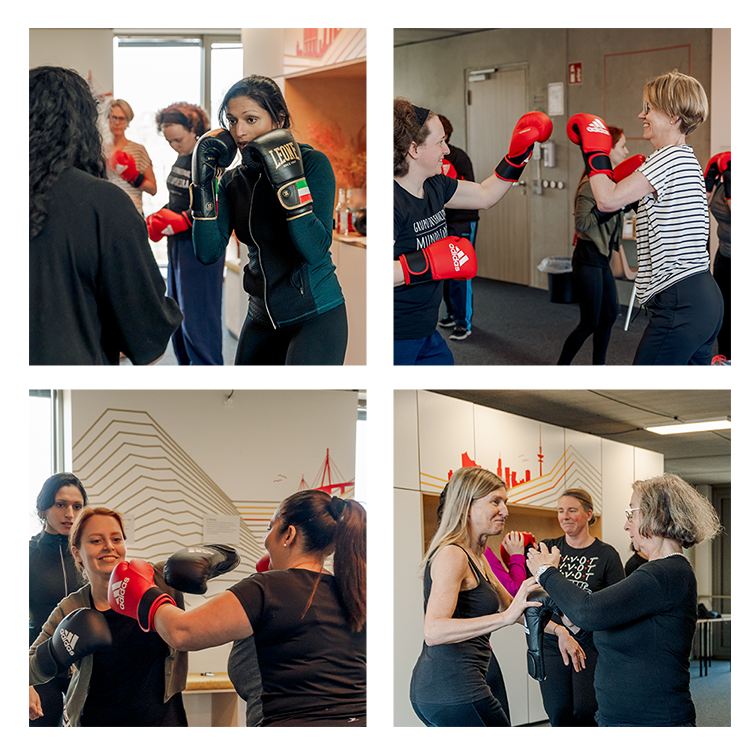
Therapeutic boxing for groups (max. 6 people)
- Social resonance without pressure to perform
- Clear structure and security
- Shared experience of strength, rhythm and tranquillity
Flow of a typical boxing therapy session
A therapeutic boxing session begins with a short check-in: current form, physical limitations and the current issue are clarified – for example, regulating tension, activating courage, setting boundaries, managing anger or finding greater inner stability again.
Following a physical orientation covering breathing, stance, and movement, measured, box-based exercises are undertaken, such as pad work, work on a double-end bag, or step sequences – without sparring and without performance pressure. The therapeutic focus is on consciously perceiving and managing inner tension, impulses, boundaries, and strength.
Body movements are not used for acting out, but rather as a means of self-regulation, focusing, and
Action control. In conclusion, breathing, relaxation, and a brief reflection support the bodily experience
to integrate and apply to everyday life.
FAQ
Therapeutic boxing is a body-oriented method that utilises elements of boxing training, embodiment, and therapeutic support. The goal is to promote self-regulation, body awareness, and emotional stability.
Box therapy is a commonly used term for therapeutic and body-oriented approaches that purposefully use elements of boxing to promote mental and physical health. Therapeutic boxing utilises these
Principles within a professionally supported framework.
Therapeutic boxing can support people suffering from stress, feeling overwhelmed, inner restlessness, emotional tension, or difficulties with emotion regulation.
Yes. Therapeutic boxing helps to physically perceive and specifically regulate stress. Movement, breathing, and rhythm support the reduction of tension and promote inner stability.
Many people find therapeutic boxing to be helpful support for anxiety, tension, and inner restlessness. The exercises promote self-regulation, confidence, and body awareness.
Therapeutic boxing cannot replace psychotherapy, but it can be a useful complementary therapy. Exercise and experiences of self-efficacy can have a positive impact on mood and drive.
Embodiment describes the interaction between body and psyche. Posture, movement, and muscle tension influence feelings and thoughts. Therapeutic boxing uses these connections in a targeted way.
A unit comprises check-in, physical orientation, box-based exercises, regulation through breathing and movement, and a brief reflection for transfer into daily life.
No. Therapeutic boxing works without sparring and without physical contact. The focus is on perception, regulation, and safety.
No. The exercises are adapted individually. It's not about performance, but about the experience and perception of one's own body.
Yes. There are both individual settings and therapeutic group offerings
small groups.
No. Therapeutic boxing does not replace psychotherapy or medical treatment. However, it can be a useful complementary therapy.
Yes. Clear rules, professional guidance, and individual load limits apply. Safety and stabilisation are the focus at all times.
Contact us
Do you have any questions or would you like a customised quote? Simply fill in the contact form. We will get back to you as soon as possible.